What California Divorce Really Costs and How Smart Content Helps Law Firms Reach People Who Need Answers
Thousands of people in California search for information about affordable divorce every single month. They type questions into Google at midnight, during lunch breaks, and while sitting in parked cars trying to figure out what comes next. For family law firms, this represents one of the clearest opportunities in legal marketing: creating content that actually answers the questions real people are asking, right when they need it most.
But most law firm websites get this wrong. They publish generic pages about their practice areas, list their credentials, and wait for the phone to ring. The firms that consistently attract new clients through organic search take a completely different approach. They build content strategies around the specific, sometimes uncomfortable questions that potential clients are already searching for.
Why Cost-Related Legal Content Performs So Well
People facing a divorce in California don’t start by searching for “best family law attorney near me.” That search comes later. The first searches are almost always about money. How much will this cost? Can I afford this? What’s the cheapest way to do this?
These cost-related queries represent what SEO professionals call “informational intent” searches. The person isn’t ready to hire anyone yet. They’re gathering information, trying to understand their situation, and figuring out whether they can even move forward. Law firms that create thorough, honest content addressing these questions position themselves as the helpful resource that person found first. And when that person is finally ready to pick up the phone, the firm that helped them understand their options is the one they remember.
Research from legal marketing studies consistently shows that content addressing specific financial concerns generates significantly more organic traffic than generic practice area pages. A well-written article about the actual costs of an uncontested divorce in California, for example, can attract hundreds of visitors per month for years after it’s published.
Breaking Down the Content Strategy
The most effective legal content strategies don’t just target one keyword and call it a day. They build clusters of related content that establish the firm’s website as an authority on a topic. For a California family law practice, a smart content cluster around divorce costs might include several interconnected pieces.
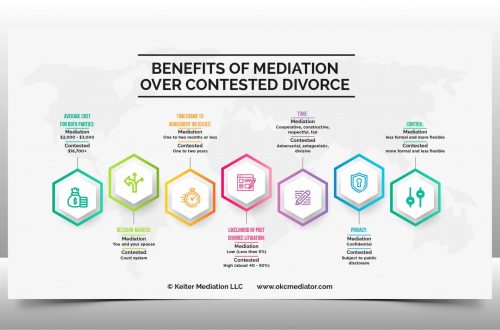
One article might cover the difference between contested and uncontested divorce costs. Another could explain court filing fees by county. A third might address how property division affects overall expenses, while another walks through the real cost of mediation versus litigation. Each piece links to the others, creating a web of relevant content that search engines recognize as comprehensive and authoritative.
Matching Content to Search Intent
Not every piece of content serves the same purpose, and understanding this distinction is critical. Some searches are purely informational. Someone typing “how much does a divorce cost in California” wants numbers, ranges, and factors that affect price. They want a straight answer, not a sales pitch.
Other searches carry more commercial intent. “Affordable divorce lawyer Los Angeles” signals someone who’s already decided to hire an attorney and is now comparing options. The content that serves this searcher looks very different. It might focus on fee structures, payment plans, or what to look for when evaluating whether a firm’s pricing is reasonable.
Smart content strategies address both types of intent with separate pages, each optimized for the specific kind of answer the searcher expects. Trying to serve both purposes on a single page usually means serving neither one well.
The Local Angle Matters More Than Most Firms Realize
California is a big state, and divorce law, while governed by state statute, plays out differently depending on location. Court processing times vary dramatically between counties. Filing fees can differ. The cost of living in San Francisco versus Fresno means that attorney rates and overall divorce costs look nothing alike.
Law firms that create location-specific content tap into less competitive search terms while providing more relevant answers. A page about “divorce costs in Orange County” will often rank faster and convert better than a generic California-wide page, simply because it speaks directly to the reader’s situation. Many SEO professionals recommend building out location-specific variations of core content topics for exactly this reason.
This approach also feeds directly into local SEO signals. When a firm’s website contains detailed, location-relevant content, search engines become more confident about showing that site for geographically targeted queries. Combined with a well-optimized Google Business Profile, this kind of content strategy can dominate local search results for high-value terms.
What Separates Good Legal Content from Everything Else
The internet is full of thin, unhelpful articles about divorce costs. Many are 300 words of vague generalities that could apply to any state. The content that ranks well and actually earns client trust goes deeper.
Good legal content includes specific numbers and ranges, updated for the current year. It names the factors that cause costs to vary, things like whether children are involved, the complexity of asset division, or whether one spouse is cooperative. It acknowledges that divorce is stressful and expensive without being condescending about it. And it provides genuinely useful information without requiring the reader to call someone just to get a basic answer.
Credibility Through Transparency
There’s a tendency in legal marketing to be vague about costs, and it’s understandable. Every case is different. But the firms whose content performs best have found a way to be transparent about ranges and typical scenarios while still making clear that individual situations vary. Readers can tell the difference between a page that’s trying to help and one that’s just trying to get them on the phone. Search engines have gotten remarkably good at detecting this distinction too.
Attorneys and marketing professionals working in this space often point out that the most effective content reads like advice from a knowledgeable friend, not like a brochure. It uses plain language. It anticipates follow-up questions and answers them. It treats the reader like an adult who can handle real information about their situation.
Measuring What Actually Works
Content strategy without measurement is just publishing and hoping. Firms that succeed with this approach track specific metrics for each piece of content they produce. Organic traffic growth matters, obviously. But so do engagement signals like time on page, scroll depth, and whether visitors click through to contact pages or related articles.
Some of the most valuable content on a law firm’s website won’t generate direct conversions. That informational article about divorce costs might have a low conversion rate on its own. But it often serves as the first touchpoint in a longer journey. A visitor reads the cost article, then reads about the divorce process, then reads about choosing an attorney, and then makes a call. Attribution modeling that only credits the last page misses the full picture.
Many legal marketing professionals recommend looking at assisted conversions and multi-touch attribution to understand which content pieces are actually contributing to client acquisition, even when they aren’t the final page before a contact form submission.
Playing the Long Game
A well-researched, comprehensive article about divorce costs in California can generate organic traffic for three to five years with only minor updates. Compare that to a paid search campaign that stops producing results the moment the budget runs out. Content strategy requires patience. It takes time for search engines to discover, evaluate, and rank new content. Most legal SEO professionals suggest that firms should expect to wait three to six months before seeing meaningful organic traffic from a new content initiative.
But the compounding nature of content marketing is what makes it so powerful for law firms. Each quality article adds to the site’s overall authority. Internal links between related pieces strengthen the entire cluster. And as the site builds topical authority around family law and divorce, new content on related subjects tends to rank faster than it would on a less established site.
For law firms willing to invest in content that genuinely helps people during one of the most difficult periods of their lives, the return on that investment compounds over time in ways that few other marketing channels can match.